
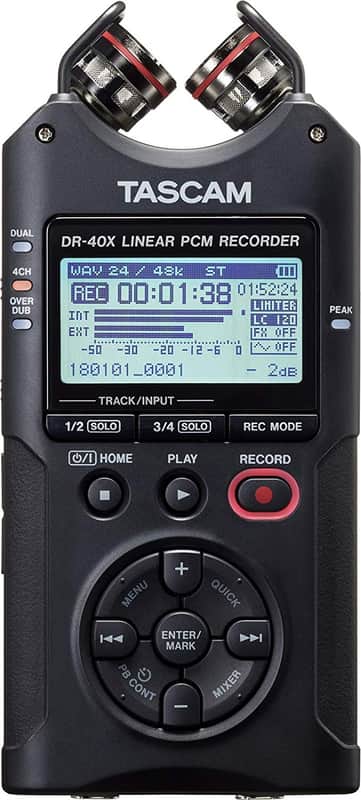
A good recorder deal has a funny way of exposing what creators actually need. The Tascam DR 40X is getting fresh attention because it sits in that rare middle lane: serious enough for musicians, filmmakers, podcasters, church media teams, and field recordists, yet not priced like studio hardware meant to scare beginners away. For U.S. buyers watching gear prices bounce around, the appeal is simple. A four track recorder with built-in mics, XLR inputs, phantom power, and USB interface duties can replace several smaller purchases if you buy it for the right job. That is the piece many sale posts miss. Price only matters after fit. The smarter move is to judge this handheld unit the way working creators judge any tool: Will it save the take when the room is bad, the laptop is absent, and the interview starts early? That is also why consumer tech buying signals matter more than hype when a familiar recorder drops into impulse-buy range.
Why the Tascam DR 40X Sale Price Has Creators Paying Attention
The reason this deal is drawing eyes is not mystery. Many creators do not need a full studio rack. They need a portable audio recorder that handles quick work without making them build a whole desk around it. A singer wants to capture rehearsal. A wedding shooter wants clean vows. A podcaster wants two external mics without dragging an interface, laptop, and power brick into a coffee shop.
That tension explains the pull. Small recorders are easy to buy, but many are built for one job. This one is more flexible because it can record with its built-in stereo mics, accept external microphones, and work as a USB audio interface. TASCAM lists it as a 4-channel portable handheld field recorder with XLR/TRS combo inputs, phantom power, and high-resolution recording support on its official product page.
What makes a four track recorder useful beyond simple voice capture
A plain voice recorder captures one moment. A four track recorder can separate that moment into parts. That matters more than shoppers expect. If you record an acoustic guitar with the built-in mics and a vocal through an external microphone, you have more control after the take. If you record a small panel, you can keep room sound and speaker mics apart instead of baking every mistake into one file.
That separation saves ordinary projects. Think of a high school theater director in Ohio recording rehearsal notes while also taking a feed from the sound board. Or a folk duo in Austin capturing a porch session before the neighbor’s dog starts barking. Perfect? No. Useful? Yes.
The counterintuitive part is that four tracks are not only for “advanced” users. Beginners often need them more because beginners make more setup mistakes. A second source gives you a backup. A lower safety track can rescue a loud laugh, a sudden clap, or a singer who steps closer during the best take.
Why older gear can beat newer shopping hype
Newer recorders can offer features that look better on a spec sheet. That does not mean every buyer needs them. A field recording device earns its place by being easy to trust under pressure. Menu speed, input layout, battery behavior, and hand feel matter when you are standing beside a stage with five minutes left.
Some current buying guides now point attention toward newer models with 32-bit float recording, including the DR-40XP, which has pushed the older unit into a more value-driven lane. That shift is not bad news for deal hunters. It may be the reason the sale feels attractive.
Here is the quiet truth: clearance can be better than novelty when your needs are clear. If you record controlled interviews, demos, lectures, ambient sound, or backup audio, the older model can still make sense. You are not buying the newest badge. You are buying enough recorder for the work in front of you.
The Real Buyer Test: Inputs, Power, and Room Noise
A cheap recorder becomes expensive when it forces extra purchases. That is where buyers should slow down. The headline sale price is only the front door. The full cost includes microphones, cables, SD cards, batteries, headphones, mounts, and time spent fixing bad audio later.
This is where the recorder’s design has weight. Built-in microphones give you speed. XLR/TRS inputs give you growth. Phantom power means condenser mics can join the setup. A podcast recording setup that starts with one handheld recorder can later add better mics without replacing the whole chain.
XLR inputs matter when the mic choice changes
USB mics are easy at a desk. They are less fun when you need to record in a gym, church hall, backyard, rehearsal room, or press area. XLR microphones give you more options because they are common in live sound, video work, music, and event production. You can borrow, rent, or upgrade them without changing your recorder.
For example, a local documentary shooter in Phoenix might start with the built-in mics for location sound. Later, the same person may plug in a shotgun mic for an interview and take a line feed from a mixer at a community event. That is where a portable audio recorder stops feeling like a gadget and starts acting like a small production hub.
The non-obvious part is that inputs are not only about sound quality. They are about risk. When one source fails, another source may still be clean. A recorder with more input options gives you more ways to avoid coming home with a silent file.
Built-in mics work best when the room behaves
Built-in microphones are not magic. They hear the room along with the subject. In a carpeted bedroom, small office, parked car, or quiet chapel, they can sound clear and natural. In a tiled kitchen, empty classroom, or noisy bar, they will hear reflections, air vents, chairs, and distant voices.
That is not a flaw. It is physics. The best field recording device still needs good placement. Point the mics toward the sound you want. Move closer than feels normal. Watch the meters. Use headphones before you trust the take.
A useful rule: if the room sounds ugly to your ears, the recorder will not make it pretty. But if the room is decent and your source is close, built-in mics can be faster than setting up stands. For YouTube makers, songwriters, and student journalists, that speed can be the difference between capturing the moment and missing it.
Who Should Buy During a Record-Low Deal
The right buyer is not always the person with the fanciest gear plan. It is the person with repeat audio problems. If you keep relying on a camera mic, a laptop mic, or a phone placed across the room, this sale deserves attention. If your current setup already gives you clean isolated tracks, the deal may be less urgent.
That is the best way to frame it. Do not ask whether the recorder is good in the abstract. Ask whether it fixes your weak spot. For many U.S. creators working out of apartments, garages, small churches, classrooms, home studios, and local venues, the weak spot is simple: audio gets treated as an afterthought until it ruins the project.
Musicians who need fast demos without a laptop
Musicians are a natural fit because ideas rarely arrive when the studio is ready. A guitarist can set the unit on a desk, aim the mics, and capture a riff before it disappears. A singer can record a rehearsal and hear pitch, timing, and room balance without opening a session on a computer.
A four track recorder also helps bands that practice in loud rooms. You can take a feed from a small mixer and keep the built-in mics on the room. That gives the recording some life without losing the shape of the performance. It will not replace a studio engineer, but it can make rehearsal playback far more useful.
The surprise is how often rough recordings lead to better finished work. When musicians hear the song structure clearly, they fix the arrangement faster. Better gear is nice. Faster feedback is often worth more.
Video creators and podcasters who record away from the desk
Video creators should care because viewers forgive average image quality faster than bad audio. A camera mic across the room makes voices feel thin and distant. A recorder placed near the speaker, or fed by an external mic, gives the edit more authority. The frame may look casual. The sound does not have to.
Podcasters who travel can also benefit. A podcast recording setup does not always happen in a treated room. Sometimes it is a hotel room at a conference, a spare office after a meeting, or a kitchen table after the kids go to sleep. A recorder with external mic support gives that setup more shape.
For more planning help, a home podcast gear checklist pairs well with a recorder purchase. So does a portable recorder buying guide if you are comparing this type of device against smaller voice recorders or newer 32-bit float models.
How to Judge the Deal Before You Checkout
A record-low tag can create bad buying behavior. People stop asking hard questions because the price feels temporary. That is how drawers fill with gear that almost solved a problem. The better move is slower: test the sale against your actual workflow before you click.
Start with three questions. What will you record most often? Where will you record it? What microphone or input will you need six months from now? If those answers point toward interviews, demos, field sound, live events, or backup audio, the deal becomes stronger. If you only need quick voice memos, a simpler recorder may be enough.
Compare the sale tag against your full kit cost
The recorder may be the largest purchase, but it is not the only one. You may need an SD card, rechargeable AA batteries, a case, a windscreen, headphones, and one or two cables. If you plan to use external microphones, add stands or clips. That turns a cheap deal into a small system.
U.S. retailer listings have recently shown the model around the $199 to $219 range, with open-box prices sometimes lower depending on stock and condition. A claimed record-low price should be judged against that wider range, not against one dramatic banner.
The non-obvious move is to spend less on the recorder only if it lets you spend wisely on the boring parts. A good windscreen can matter more than a luxury cable. Extra batteries can save a paid shoot. Closed-back headphones can expose a hum before it ruins the file.
Check return rules, storage, and workflow fit
Before buying, check the return window and whether the unit is new, used, open box, or final sale. Discounted audio gear can be a great value, but return rules matter because recorders need hands-on testing. Buttons, ports, battery doors, and screens are not small details when you use the device in the field.
Workflow matters too. Check how you will move files, name takes, monitor levels, and back up sessions. A recorder that sounds good but slows you down can become a shelf item. Do one practice run before using it on paid work or a once-only family event.
The best test is simple. Record a voice, an instrument, and a noisy room. Listen on headphones. Move the recorder closer. Try an external mic if you own one. After twenty minutes, you will know more than any sale page can tell you.
Conclusion
A recorder deal is only a win when it solves a real recording problem. This one makes sense for creators who need more than a phone, more control than a camera mic, and less fuss than a laptop-based rig. It is especially appealing for musicians, podcasters, video shooters, teachers, churches, and local media teams that need dependable sound in ordinary American rooms.
The Tascam DR 40X is not the newest recorder in the category, and that may be part of the appeal. A lower sale price can turn a proven tool into a practical buy, as long as you understand its limits and plan the rest of your kit. Do not buy it because the banner says record low. Buy it because your next recording needs cleaner inputs, safer tracks, and a setup you can carry in one hand. Good audio starts before the red light turns on.
Frequently Asked Questions
Is this recorder worth buying for beginners?
Yes, as long as you plan to record more than quick voice notes. Beginners benefit from the built-in mics, simple handheld format, and room to grow into external microphones. It is a smarter first buy for creators who expect their audio needs to expand.
How much should I pay during a sale?
Compare the sale price against several U.S. retailers, not one banner. If the price lands well below the usual street range and the return policy is fair, it may be worth acting. Add accessories before judging the full cost.
Can it be used for podcast recording?
Yes, it can work for a podcast recording setup, especially for two-person interviews or mobile sessions. External microphones will usually sound better than built-in mics in untreated rooms. Headphones are strongly recommended so you can catch noise while recording.
Is it good for music demos?
Yes, it fits song sketches, rehearsal playback, acoustic demos, and small live captures. Musicians should treat it as a fast writing and review tool, not a replacement for a full studio session. Its value comes from speed and separate track control.
Does a field recorder sound better than a phone?
Often, yes. A dedicated recorder gives better input options, gain control, monitoring, and file handling. A phone can work for notes, but it struggles when distance, room echo, loud sources, or external mics enter the picture.
What accessories should I buy first?
Start with a reliable SD card, rechargeable AA batteries, closed-back headphones, and a small case. Add a windscreen if recording outdoors. Cables and external microphones can come later once you know your main recording style.
Is it better for video creators or podcasters?
It can serve both, but the best fit depends on workflow. Video creators gain cleaner backup audio and external mic options. Podcasters gain a portable setup for interviews away from the desk. Both groups benefit from monitoring before recording.
Should I buy this or a newer 32-bit float recorder?
Choose the newer option if you often record unpredictable loud sources and want extra safety in post. Choose the discounted older unit if your levels are controlled, your budget matters, and you need XLR inputs with a practical handheld workflow.