

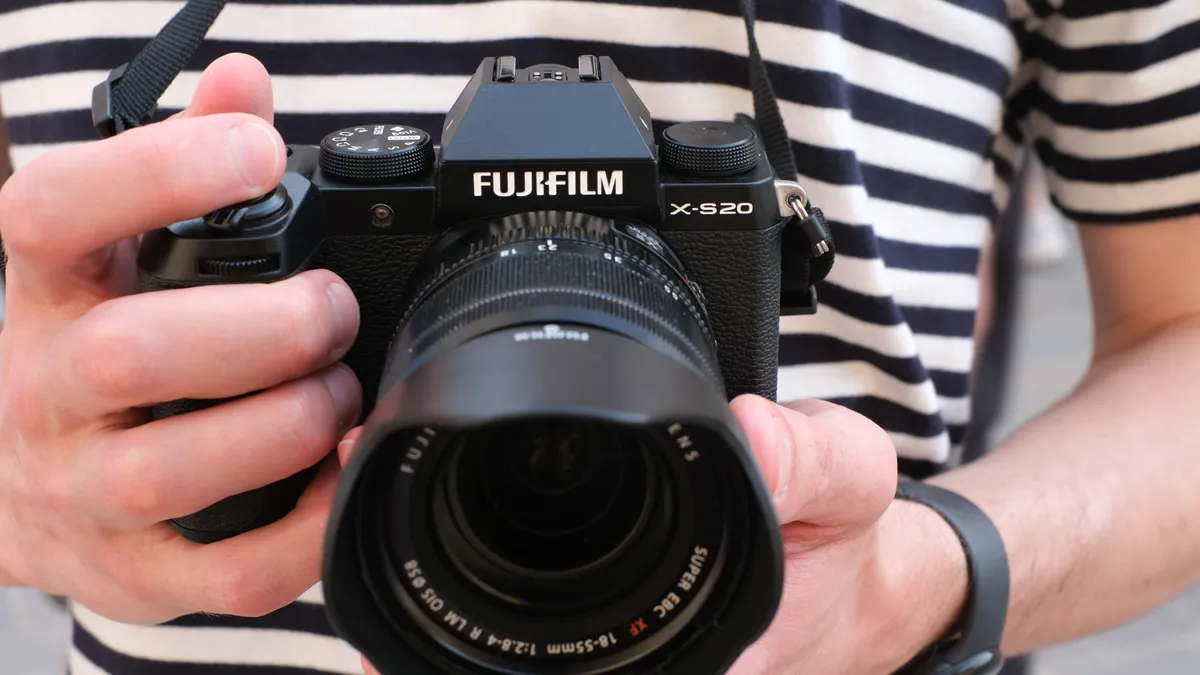
A camera discount only matters when the body still solves a real problem. That is why the Fujifilm XS20 deal is getting attention from U.S. shoppers who want one camera for travel photos, YouTube clips, family weekends, product shots, and everyday creative work. The official model name is X-S20, and it sits in that sweet middle lane where beginners can grow without feeling buried in pro menus. For buyers tracking consumer product trends, the bigger story is not the sale sticker alone. It is timing. Fujifilm listed the X-S20 body at $1,299.95 when it announced U.S. availability around June 29, 2023, while recent U.S. listings have often shown higher street prices depending on seller and kit. That makes any sharp drop worth checking with care. The right question is simple: does the price finally make this hybrid camera a smarter buy than cheaper starter bodies or newer, flashier alternatives?
Why the Fujifilm XS20 Price Drop Deserves a Closer Look
Camera shoppers get trained to chase the biggest markdown, but the X-S20 needs a calmer read. It is not an impulse gadget like a Bluetooth speaker or a coffee grinder. It is the center of a system. Once you buy the body, you may add lenses, batteries, cards, filters, a mic, and maybe a small cage. A lower body price can help, but it should not blind you to the full setup cost.
Why the sale price feels different in the Fujifilm market
Fujifilm bodies do not always behave like other consumer tech. Phones drop fast. Laptops cycle hard. Camera bodies can hold value longer when demand stays high and supply stays uneven. That is why a Fujifilm camera deal can feel rare even when the discount looks modest on paper.
The odd part is that a “lowest price” headline can mean different things. It might mean the lowest price at one retailer, the lowest price for a certain kit, or the lowest price after a temporary coupon. Best Buy has shown the body at $1,399.99 with a previous price of $1,499.99, while B&H has listed the same body at $1,499.00. That spread is a reminder to compare the cart, not the headline.
A good buyer checks three things before getting excited: whether the seller is authorized, whether the product is U.S. warranty stock, and whether the deal includes a lens you would buy anyway. A cheap gray-market body can become expensive if service gets messy. A kit lens bundle can be a steal if you need it, or clutter if you already own better glass.
What “lowest since launch” should mean to a real buyer
The launch price still matters because it gives you a baseline. Fujifilm’s U.S. announcement placed the body at $1,299.95, the XC 15-45mm kit at $1,399.95, and the XF 18-55mm kit at $1,699.95. If today’s deal is above the original body MSRP, it may still be a lower price against recent retail tags, but it is not automatically a historic bargain in the plainest sense.
That sounds negative. It is not.
The counterintuitive truth is that a deal can be worth taking even when it is not below launch MSRP. Camera prices have been shaped by demand, stock gaps, and newer bundle patterns. If the body is available now from an authorized seller, includes the kit you want, and beats the current shelf price, it may still be the best practical buy for a U.S. shopper who wants to shoot this month instead of waiting for a cleaner chart.
Use a camera deal buying checklist before checkout. Look at the final tax, return window, warranty language, and lens value. Then decide whether the number in front of you beats the next-best real option, not some perfect sale that may never appear in your ZIP code.
What the X-S20 Gets Right for Everyday American Creators
The X-S20 works because it does not force you to choose one identity. You can be a parent at a soccer field on Saturday, a small business owner filming product clips on Monday, and a traveler taking street photos in Chicago or Austin the next weekend. Many cameras claim that range. This one makes it feel less fussy.
The X-S20 mirrorless camera is built for mixed photo and video use
The X-S20 mirrorless camera uses a 26.1MP back-illuminated X-Trans CMOS 4 sensor and X-Processor 5, which gives it more punch than its small body suggests. Fujifilm also lists five-axis in-body image stabilization rated up to 7.0 stops, plus a 491g body weight with battery and card. That matters when you are walking all day, not shooting in a studio with a table full of gear.
Here is a plain example. You are filming a booth at a farmers market in Portland, then turning around to grab stills of packaging, customers, and a quick portrait for Instagram. A camera without stabilization may push you toward a tripod. A camera with weak video tools may force you back to a phone. The X-S20 sits between those headaches.
The non-obvious win is grip size. Small cameras often look better online than they feel in a hand. The X-S20 has a deeper grip than many flat, retro bodies, so it feels less fragile with a zoom lens attached. That does not show up as a flashy spec, but it matters after hour two.
Film simulations make the camera feel finished before editing
Fujifilm’s color reputation is not hype alone. The X-S20 includes 19 Film Simulation modes, according to Fujifilm’s product page. For a buyer who does not want every image to become an editing project, that can be a real advantage.
Think about a family trip to Santa Fe. Harsh afternoon light, adobe walls, denim jackets, red signs, dusty sidewalks. A neutral file may be flexible, but it can also feel flat until you edit it. A Film Simulation can give you a finished JPEG that feels ready to share before dinner.
That is why this camera appeals to people moving up from phones. The phone made them expect finished color. The X-S20 gives them more control without making every photo feel like homework. For many Americans buying their first serious camera, that is the bridge.
Where the Deal Makes Sense and Where It Does Not
A sale is only good when it matches the buyer. The X-S20 is not the cheapest Fujifilm body, not the most rugged Fujifilm body, and not the most advanced video machine in the X Series. Its strength is balance. That is also where some shoppers make the wrong call.
The best buyers are not always the most advanced users
The strongest match is someone who wants one compact body for stills and video. A new parent, a travel creator, a real estate assistant, a food blogger, a college media student, or a small shop owner can all make a case for it. A hybrid mirrorless camera saves them from buying one body for photos and another setup for video.
The X-S20 also makes sense for an X-S10 owner who wants better battery life and newer autofocus behavior. Fujifilm says the X-S20 gets 750 frames in normal mode with the NP-W235 battery, compared with 325 frames for the X-S10. That is not a tiny comfort upgrade. It changes how often you worry.
A strange truth: the best buyer may be someone who hates gear talk. That person will care less about sensor charts and more about whether the camera wakes up, focuses, holds a charge, and gives pleasing color. The X-S20 is strong there. It rewards use more than debate.
When another camera is the smarter move
The X-S20 is less convincing if you need weather sealing, dual card slots, or a more pro-focused body layout. A wedding shooter who cannot risk one card slot may want a different tool. A sports shooter who lives at the edge of autofocus speed may also look higher in the line.
It may also be overkill for someone who only wants casual vacation photos. A compact fixed-lens camera or a phone with a small gimbal may serve that person better. Spending less can be wise when the extra control will sit unused.
Use a beginner mirrorless camera guide if you are unsure. Match the body to the work you will repeat. Not the work you hope you might try once. A camera that fits your normal Tuesday will serve you better than one built for a fantasy trip.
How to Judge the Deal Before You Buy
The final decision should happen in the cart, not on a social post. Retail price, seller name, lens kit, warranty, and return terms can change the value fast. The X-S20 deserves attention, but attention is not the same as automatic checkout.
Compare the body, kit lens, and total cost
Start with the body-only price. Then compare it to the lens kit. If the kit adds a lens for a small bump, ask whether that lens fits your real use. The XC 15-45mm is light and easy for travel. The older XF 18-55mm kit has long been loved for better feel and brighter aperture range. The newer XF 16-50mm kit may appeal if you want a fresher walkaround option.
A Fujifilm camera deal can hide value in the kit. Sometimes the body discount looks small, but the bundle makes sense because the lens would cost more on its own. Other times, the body-only deal wins because you plan to buy a prime lens like a 23mm or 35mm instead.
Do not forget accessories. A fast SD card, spare battery, camera strap, small bag, and cleaning kit can add up. If video matters, add a mic and maybe a compact tripod. A sale body can lose its shine if the full starter setup pushes past your comfort zone.
Check official specs against your own shooting habits
Fujifilm’s official X-S20 product page lists 6.2K/30p 4:2:2 10-bit internal recording, 4K/60p, 1080/240p, dual 3.5mm mic and headphone jacks, and support for a cooling fan accessory. Those are strong tools for a hybrid mirrorless camera, but only if you will use them.
A YouTuber filming desk videos may care more about the headphone jack and Product Priority mode than the 6.2K setting. A hiker may care more about weight, grip, and battery life. A parent may care most about autofocus that can keep up with kids running through mixed light.
That is the honest way to shop. Do not buy the spec sheet. Buy the moments you keep missing. If the X-S20 fixes those misses at a lower price than usual, then the deal starts to make sense.
Conclusion
The X-S20 is still one of the more sensible middle-lane cameras in Fujifilm’s lineup because it respects how people shoot now. Photos, video, travel, family, side hustles, and social clips all overlap. A body that can handle those jobs without feeling huge has real value. The Fujifilm XS20 price story should be judged with a clear head, though. Check the retailer, compare the kit, and do not treat every “lowest price” claim as equal. The strongest reason to buy is not fear that the sale will vanish. It is confidence that this camera fits your actual life. If the current offer gives you authorized U.S. stock, a fair return window, and the right lens path, this may be the moment to stop watching and start shooting.
Frequently Asked Questions
Is the Fujifilm X-S20 worth buying on sale?
Yes, if you want one compact body for both still photos and video. It is strongest for travel, family, social content, small business work, and beginner-to-intermediate creative projects. Check the seller and warranty before treating any discount as a safe buy.
What is a good price for the Fujifilm X-S20 body?
A good price depends on current U.S. street pricing, the seller, and whether the product has a full U.S. warranty. Compare the body-only price against authorized retailers, then check whether a lens kit gives better value for your shooting needs.
Is the X-S20 good for beginners?
Yes, it is beginner-friendly without being limiting. Auto mode, subject detection, Film Simulations, and a comfortable grip make it easier to start. Manual controls, strong video settings, and interchangeable lenses give you room to grow over time.
Is the X-S20 better for photos or video?
It works well for both, which is the main appeal. Photographers get Fujifilm color, stabilization, and a 26.1MP APS-C sensor. Video users get strong recording options, a flip screen, mic support, headphone monitoring, and creator-focused modes.
Should I buy the X-S20 body only or with a kit lens?
Buy body only if you already know which lens you want. Choose a kit if the included lens fits your daily use and the bundle price is fair. Beginners often benefit from a kit lens because it gives them a flexible starting point.
Does the Fujifilm X-S20 have image stabilization?
Yes, it has five-axis in-body image stabilization. That helps with handheld photos in lower light and smoother handheld video. It does not replace good technique, but it makes the camera more forgiving for travel and everyday shooting.
Is the X-S20 good for YouTube and vlogging?
Yes, it is a strong choice for YouTube, vlogging, product videos, and short-form content. The flip screen, Vlog mode, Product Priority mode, mic input, headphone jack, and high-quality video settings make it practical for solo creators.
What should I check before buying an X-S20 deal?
Check whether the retailer is authorized, whether the camera has a U.S. warranty, what lens is included, and the return window. Also compare the final cart price after tax and shipping. The cheapest listing is not always the safest value.